Quick answer
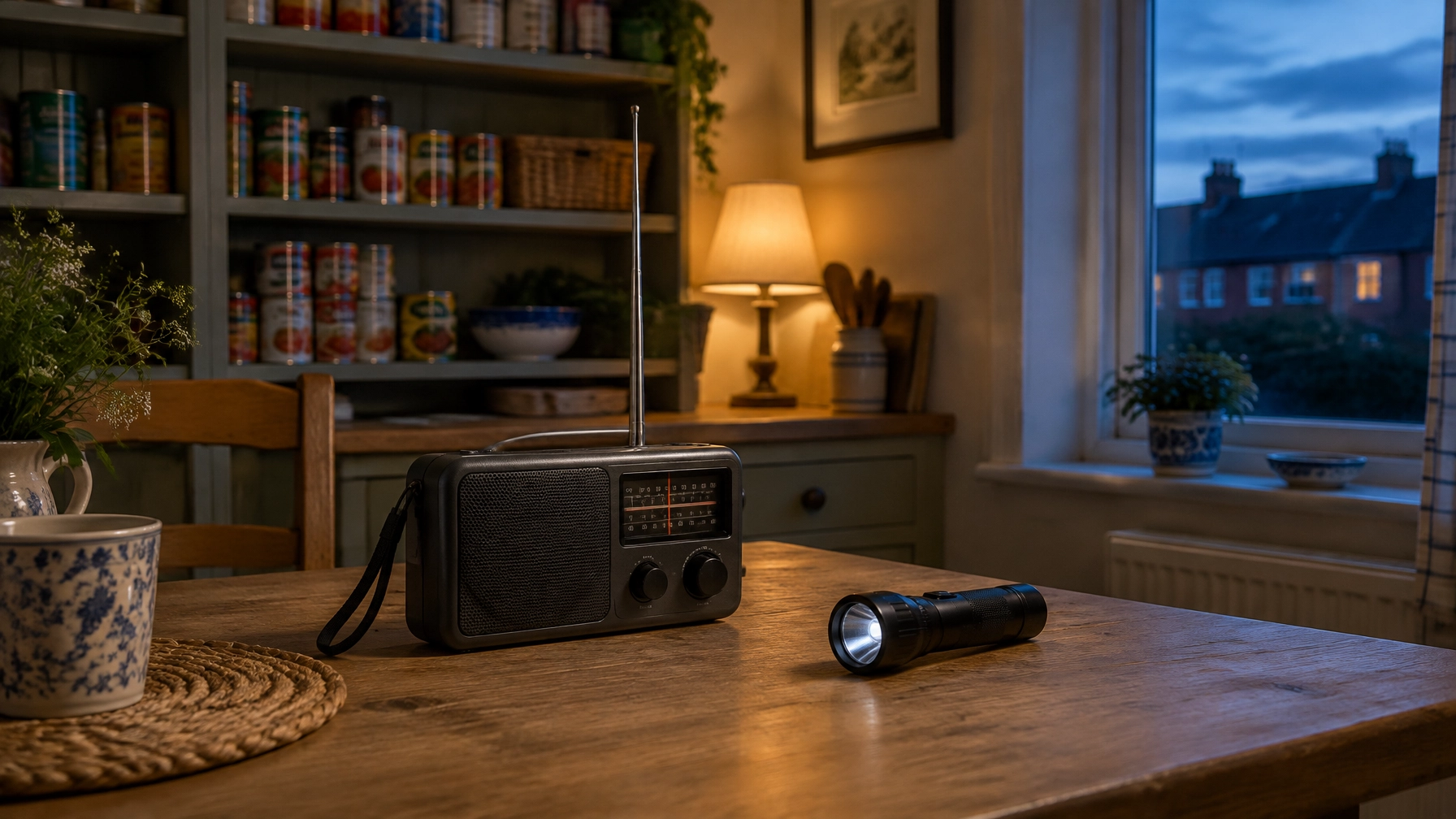
“Nine meals from anarchy” is a phrase first published by American journalist Alfred Henry Lewis in 1896, not a UK government warning; as of 9 November 2026 the UK’s Be Ready campaign still advises households to prepare for three days, with 3 litres of drinking water per person per day, non-perishable food and a battery or wind-up FM radio.
“We are nine meals from anarchy.” The phrase appeared in the BBC’s recent report about a plan for a nationwide blackout. It sounds like a government warning. It is actually a line first published by an American journalist in 1896.
The arithmetic still fits: three meals a day for three days is nine meals. But the phrase is a dramatic shorthand, not a prediction of what people will do or a scientific threshold.
Has the government changed its advice to store more than three days of supplies? No. As of 9 November, the Be Ready campaign still advises households to prepare for three days. The headlines about longer supplies reflect expert opinion and reporting on the BBC’s “Black Sky” plan, not new household guidance. What changed this week is that the BBC showed more of the emergency broadcasting arrangements designed for a severe outage.
📻 What the BBC revealed about its Black Sky plan
In a report published on 7 November, BBC correspondent David Sillito described the broadcaster’s plan for a nationwide blackout. About 100 staff would operate a special emergency radio studio, with secure communications that do not depend on the internet. The BBC says the team would have food, water and fuel to operate for at least three days without resupply.
The plan also uses satellite-equipped vehicles and journalists at emergency centres around the UK. If satellite phones failed, staff would use pre-arranged protocols and meeting points. BBC reporting says FM transmitters, isolated from the internet, have diesel generators intended to keep broadcasts running for three days.
The reason for using FM is practical: it can carry information without household broadband or mobile data. The BBC’s report describes emergency messages prepared for broadcast, including public health scripts already published on GOV.UK.
That is a broadcaster’s contingency plan. It is not a change to the Be Ready checklist.
📰 Where “nine meals from anarchy” came from
Quote Investigator traces the earliest identified version of the saying to Alfred Henry Lewis, an American journalist. In 1896, Lewis wrote that “the only barrier between us and anarchy is the last nine meals we’ve had.” In 1906, he used the better-known wording: “There are only nine meals between mankind and anarchy.” (Quote Investigator, 2 May 2022.)
So the line was not coined by the British government or, as the BBC describes it, the civil contingency world. It is an old American newspaper phrase that has been repeated in many forms.
In the UK, it became part of food-security discussions. In an essay published in 2025, Robin Maynard recounts that during the 2000 fuel protests, supermarket bosses warned Tony Blair’s emergency Cobra committee that London and other major cities could be within three days of running out of food. Maynard connects that warning to the “nine meals” maxim. That is his account of the episode, not a government slogan or a formal explanation of the present three-day guidance. (Robin Maynard, 21 July 2025.)
The neat fit between nine meals and three days is memorable. It does not establish that the phrase set the government’s current advice.
🌧️ Lancaster: what a real power cut showed
The BBC’s report also revisited the December 2015 floods in Lancaster. At 22:45 on 5 December, flooding cut electricity to 61,500 people. Streets went dark; shops, petrol stations and cash machines closed. Some water supplies began to fail because they depended on electric pumps.
The two communications systems reported to have survived were copper-wire landlines and FM radio. Local station The Bay used an emergency generator and one landline to keep broadcasting. Professor Roger Kemp of Lancaster University, whose work focuses on engineering, safety and electrical systems, later described the station’s technology as familiar to engineers from the 1960s. Asked whether readiness had improved, he told the BBC: “If anything, we’ve gone backwards.”
That was Kemp’s assessment. He pointed to the planned switch-off of the UK’s copper Public Switched Telephone Network on 31 January 2027. The government told the BBC that copper landlines had been a useful fallback but had become unreliable and difficult to repair. The episode is a reminder to plan for information access, not proof that any one communication system will always work.
⚡ Why three days, and what the NESO detail actually says
The BBC quoted an unnamed insider saying planning was originally thought to need five to seven days, but that the latest advice from NESO, the National Energy System Operator, was that power would probably be restored in two to three days.
That detail needs careful handling. It is an unnamed source quoted by the BBC, not a published NESO statement. But its reported direction is clear: the planning period described moved down from five to seven days, not up. It does not support the claim circulating this morning that the government is secretly instructing households to store more than three days of supplies.
A longer household buffer may still make sense for you. That is a separate question from whether Be Ready has changed its advice.
🧭 The case for preparing beyond the minimum
Some experts argue that three days is not enough. Professor Ilan Kelman of UCL told the Daily Mail on 31 October that households should prepare for two weeks. Marcus Clarke, founder of The Prepared Household, called a 72-hour kit “fundamentally insufficient” in the Daily Mirror on 7 October. These are expert opinions, not new government guidance.
Other countries set longer household targets: Sweden advises people to manage for at least a week, while Germany’s BBK recommends, if possible, having supplies for ten days. Those comparisons show that countries take different approaches; they do not change the UK advice. For more on the wider European discussion, see our 1,000-day preparedness explainer.
A sensible middle ground is to treat three days as the starting point, then extend gradually if your budget and storage allow. Add food you already eat during normal shops and rotate it. Think about how you would store or purify water safely. Avoid panic-buying: a useful buffer should fit your household, not leave you with supplies you cannot use or afford.
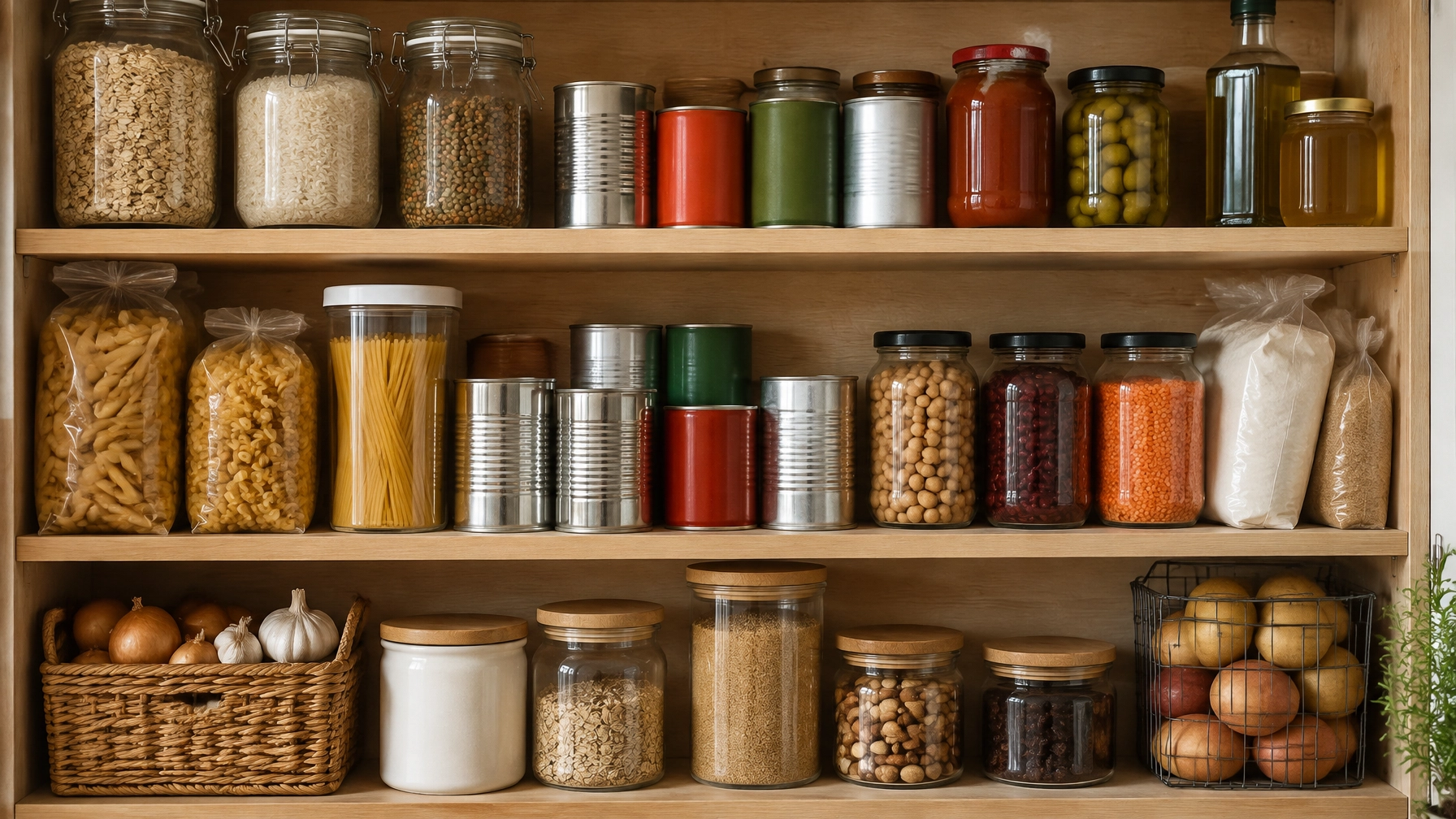
For more on stocking up sensibly, see our guides to food preparedness, how much food to stockpile, long shelf-life foods, food safety in a power cut and storing water for emergencies. If you want it worked out for your household, the 72-Hour Household Plan does the sums for you.
🍽️ What the public health scripts say about food
The emergency food and health scripts on GOV.UK were published on 16 December 2025. The four UK Chief Medical Officers developed them as independent advisers, with UKHSA input, for the “very unlikely” scenario of a national power outage. The published page says the scripts are not government policy; they are advice prepared for a situation where radio may be the way to reach people.
The food script says to eat chilled or defrosted food that is likely to spoil first, then short-shelf-life food that does not usually need refrigeration, and to leave longer-life cupboard food until last. It says a fridge should stay cold for around four hours after power loss; a full freezer may stay frozen for up to 48 hours, or 24 hours if half full. The script also gives extra caution for people more likely to become seriously unwell from food poisoning. Check the CMO script itself for the full advice.
These scripts are not an update to the three-day household checklist. They are practical instructions prepared for a very different, unlikely scenario.
✅ Your Be Ready checklist is unchanged
The Be Ready campaign says being ready for three days can help you manage while support reaches those most in need. It recommends building up gradually and checking what you already have.
The radio is easy to overlook. Our wind-up radio guide explains what to look for. You can also read our 72-hour kit guide, head torch guide, guide to boiling water without power, blackout kit guide and three-day household skills list.
The phrase is 130 years old. The practical advice it now evokes is modest: a few days of usable supplies and a way to receive information. Preparedness is about confidence, not fear. Start with the Be Ready checklist, then extend it at a pace that works for you.
❓ FAQs
Sources
- BBC News, David Sillito, “What happens if all the lights go out? This is the plan for a ‘Black Sky’ event”, 7 November 2026.
- Quote Investigator, “There Are Only Nine Meals Between Mankind and Anarchy”, 2 May 2022.
- GOV.UK, Public health advice from UK CMOs during a national power outage, 16 December 2025.
- Be Ready, household emergency guidance, accessed 9 November 2026.
- Robin Maynard, “UK Food Security – ‘Nine Meals from Anarchy’?”, 21 July 2025.
- Daily Mail, Ilan Kelman’s two-week preparedness recommendation, 31 October 2026.
- Daily Mirror, “Prepping expert says 72-hour stockpile kit for UK emergency ‘is not enough’”, 7 October 2026.
- Swedish Civil Contingencies Agency, home preparedness · Germany’s BBK, emergency provisions.