Quick answer
For UK power cuts, choose a head torch with a useful low setting, published runtime and a backup power plan: the Petzl Actik Core and Lifesystems Intensity 580 accept three AAA batteries as an alternative to their rechargeable packs, while the BioLite HeadLamp 425 relies on USB charging.
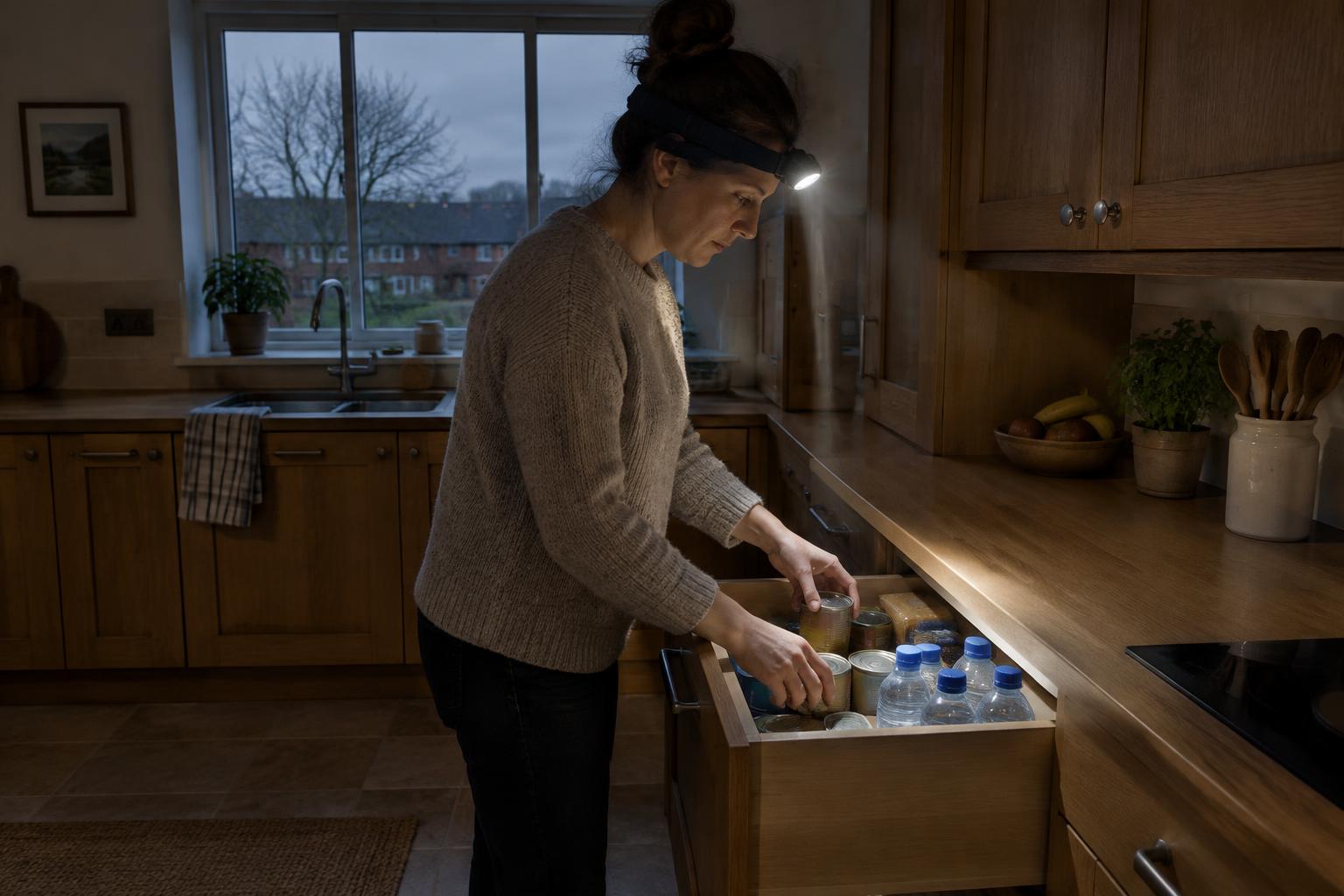
You’re halfway through checking a cupboard during a power cut when the torch slips off the table. Now one hand is holding the light, the other is moving supplies, and you still need to find the fuse box.
A head torch solves a simple problem: it keeps light pointed where you look while leaving both hands free. That can help during a blackout, water-storage checks, campsite jobs or a winter walk.
Our emergency lighting guide covers the wider mix of torches and lanterns. This companion guide looks specifically at head torches: fit, beam, battery choices and the trade-offs between popular models.
This is a specification- and report-based buying guide, not a hands-on test. We have not tested these products ourselves. Model details below come from manufacturer information and published reviews or owner reports. Features and prices can vary by version, so check the exact model before buying.
🔎 What people are looking for in a head torch
Recent buying coverage repeatedly focuses on rechargeable or USB-C charging, red light, battery life, water resistance, running comfort and brightness. That suggests useful questions to ask before you buy. It does not establish search-volume rankings: we did not find a reliable public dataset to quantify which phrases are trending.
If you’re comparing the “best head torch UK” options, start with your use. A lamp for walking the dog round the block does not need the same output as one for fast trail running. For a power cut, reliable low settings and a way to replace or recharge the battery can matter more than maximum brightness.
🏆 Three head torches worth comparing
Best all-rounder: Petzl Actik Core
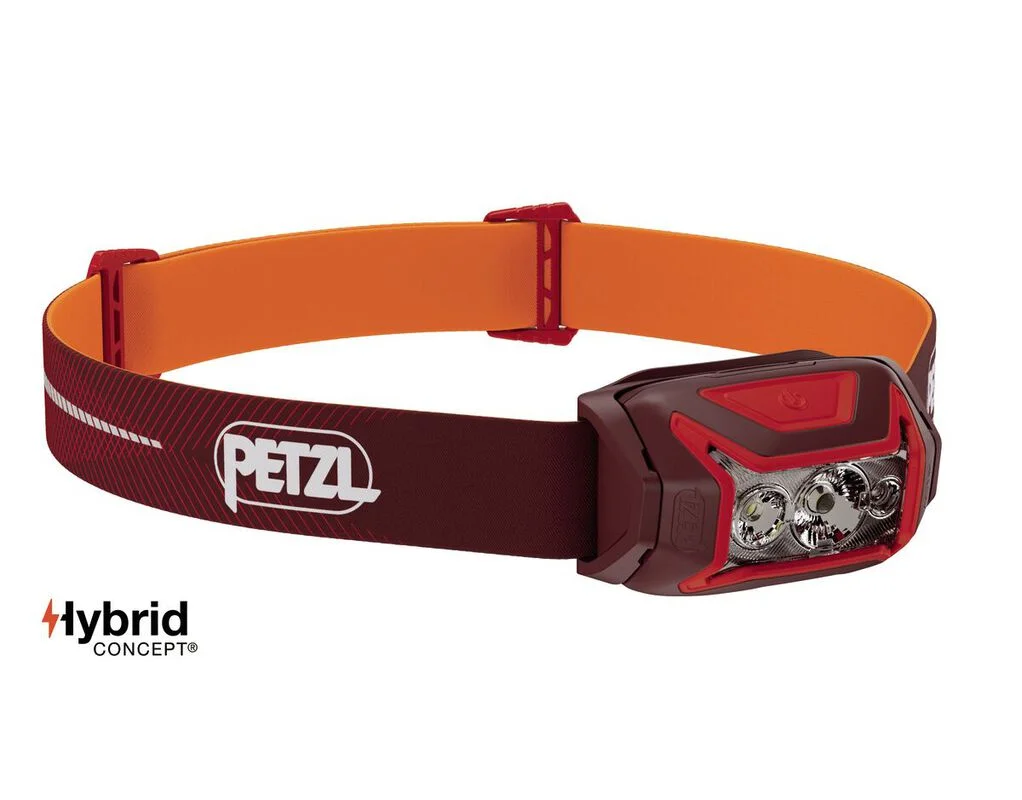
The Actik Core offers a mix of features that suits home use and outdoor activities. Petzl lists a maximum output of 625 lumens, a weight of 88g, red light and IPX4 weather resistance. Its wide and focused beam options are intended to help with both close-up tasks and seeing further ahead. The supplied rechargeable CORE battery can be replaced by three AAA batteries if needed, according to Petzl’s product specifications.
Runtime depends on the mode, battery source and product generation. Petzl has sold several Actik Core versions, so use the runtime table for the exact model you are buying rather than combining figures from different versions. Maximum-output runtime is not a promise that the lamp maintains peak brightness throughout.
A 2025 review by Live for the Outdoors describes the lamp as comfortable and straightforward to use, while noting its IPX4 rating and limited choice of brightness levels. A verified customer excerpt on Feefo also praises its charging and brightness. That is useful individual feedback, not a large owner survey.
Best for: A single versatile head torch for household jobs, camping and walking, especially if you want a replaceable battery option.
Trade-off: IPX4 is weather resistance for splashes, not protection for submersion. Its brightest setting also has a shorter quoted runtime than its low setting.
Best value and wet-weather specification: Lifesystems Intensity 580
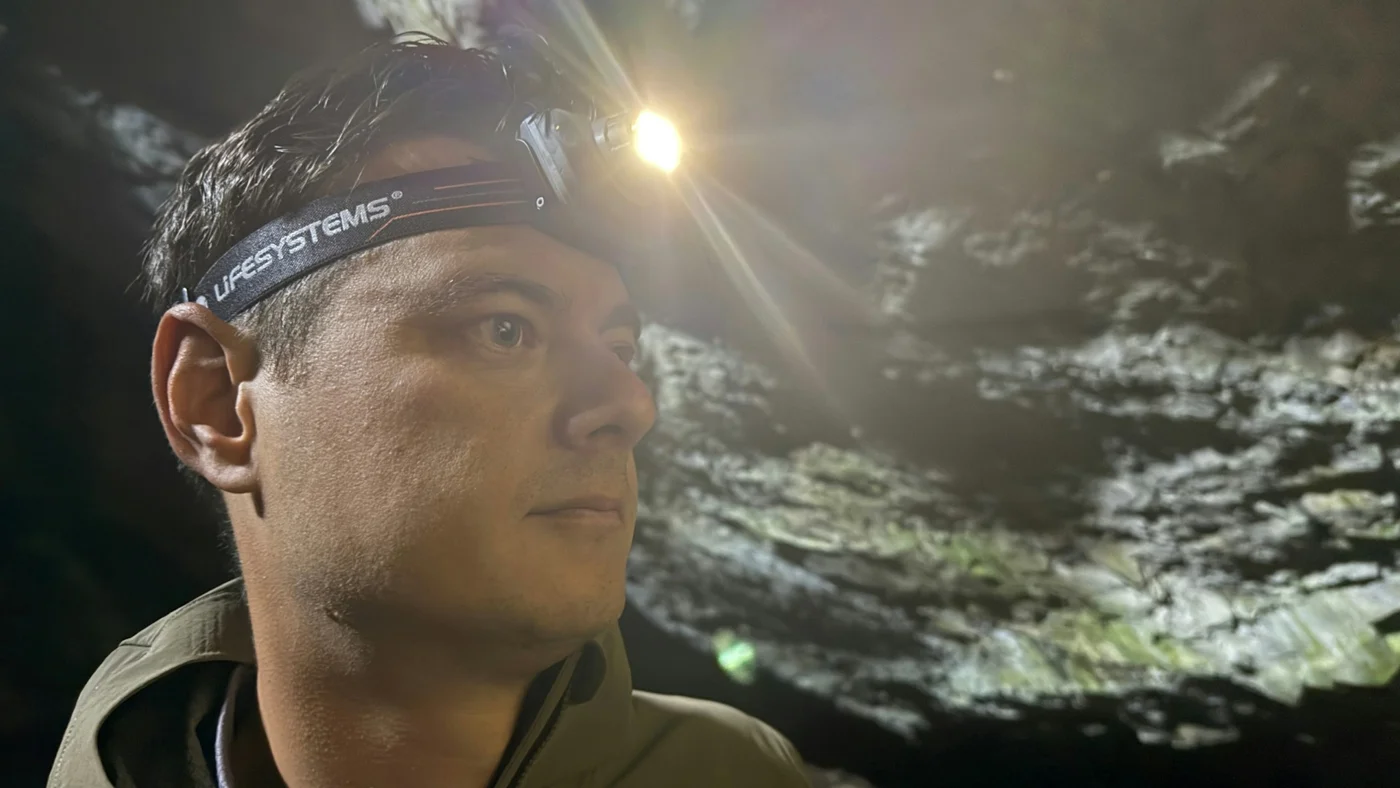
Lifesystems lists a maximum output of 580 lumens, a 70m beam and IPX6 water resistance for the Intensity 580. It uses a USB-C rechargeable battery pack, but can also run on three AAA batteries. There is a battery indicator, and the beam can be adjusted from flood to spot, according to the model details in a 2025 Live for the Outdoors review.
The same review lists runtimes of 2.5 hours at maximum output and 10 hours at 160 lumens. Its tester praised the value and practical features, but found the lamp slightly bulky and front-heavy. The review also notes that the battery pack must be removed to charge it. The publication cited a £35 recommended retail price at the time; treat that as a dated reference, not a current UK price. The manufacturer’s current listing uses different runtime wording, so check the supplied battery and operating mode before relying on either figure.
Best for: Buyers who want weather resistance, rechargeable convenience and AAA fallback without paying for high-end running features.
Trade-off: At about 100g, it weighs more than some alternatives. The published review also notes no brightness dimming function or button lock. We did not find a robust UK owner-review sample for this model, so this pick is based mainly on its published specifications and the independent review, not a broad set of verified owner reports.
Best low-profile fit: BioLite HeadLamp 425
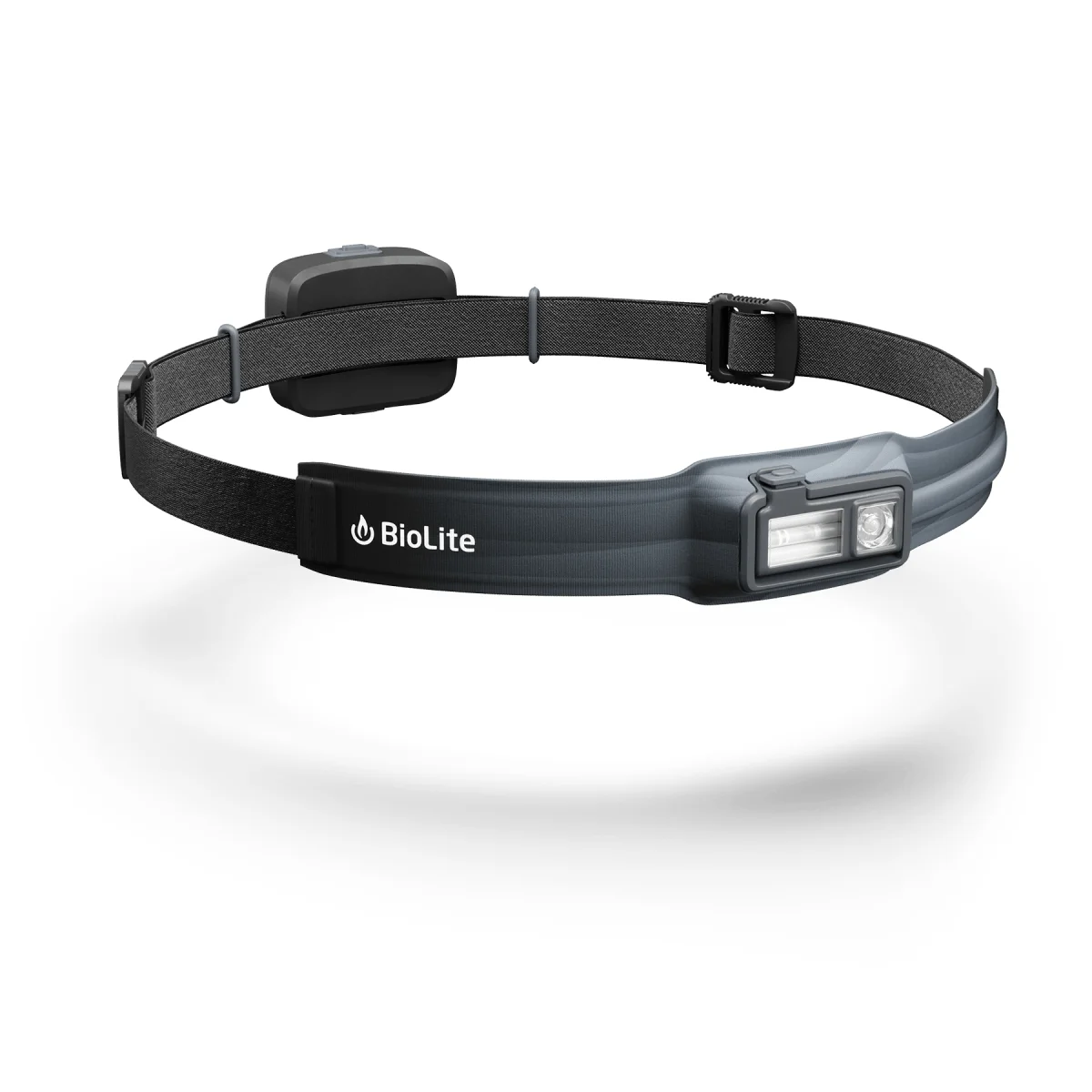
The BioLite HeadLamp 425 weighs 78g and provides up to 425 lumens. Its specifications include USB-C charging, front red light, a rear red light, an IPX4 rating and up to 60 hours on low. The manufacturer says its slim front profile and integrated headband are designed to reduce movement while worn. See the BioLite product details. BioLite quotes four hours on high and 60 hours on low; compare those modes separately rather than expecting maximum brightness for 60 hours.
A rear red light can help other people see you from behind, but it is not a replacement for reflective clothing or suitable lights when travelling on roads. The head torch is also rechargeable only; it does not offer a standard AAA fallback.
The Great Outdoors described the fit as comfortable in its review, but its field report also cautioned that runtime on high output is limited. Check recent UK owner feedback and warranty terms before buying: we have not found a representative UK owner survey for this model.
Best for: Shorter walks, running or campsite use where low weight and a close-fitting design are priorities.
Trade-off: No replaceable standard batteries. If it is for an emergency kit, plan how you would recharge it and keep another light available.
⚙️ How to choose a head torch for your needs
Match brightness to the job
Lumens describe the amount of light a lamp produces. They do not tell you everything about how useful its beam will feel. Beam shape and distance matter too. Petzl’s product information distinguishes between wide and mixed beams, while its published figures show how much runtime can differ between brightness settings.
For a power cut, you will often want a comfortable low or medium mode for moving around indoors. For outdoor walking, a beam that shows both the ground nearby and the path ahead is more useful than a high maximum figure alone.
Choose your power plan before you buy
A rechargeable model is convenient if you keep it charged and have a way to top it up when the mains are unavailable. A model that accepts replaceable AAA batteries gives you another option, but only if you keep the right cells stored safely.
Ask yourself:
- Can you recharge the lamp from a power bank?
- Can its battery be replaced, or does it rely on a built-in cell?
- Does the manufacturer publish runtime at low and medium settings?
- Can you check the charge level before you need it?
Check water resistance, fit and controls
The IP rating helps explain water resistance. The manufacturers list IPX4 for the Petzl and BioLite models, and IPX6 for the Lifesystems model. These ratings describe different levels of water protection; none should be treated as permission to ignore the product’s instructions.
Comfort matters too. If you plan to wear the torch for more than a few minutes, check the weight, strap adjustment and tilt. Look for controls you can operate easily, including in gloves, and a lock feature if you’ll carry it in a bag. If possible, try the fit with a hat or helmet you expect to wear.
✅ Quick head torch checklist
Before you buy, check that the model:
For a broader household setup, see our emergency lighting guide and blackout kit buying guide. You can browse more equipment advice in the Survival Gear Buying Guides hub.
🧭 Prepared, not paranoid
A head torch is a practical tool, not a prediction. Pick one that fits the way you’ll actually use it, learn its controls and check the battery before you need the light. Preparedness is about confidence, not fear.
From the EODSurvival shop — our 72-Hour Household Plan
A head torch covers light. Our own 72-Hour Household Plan covers the rest of a short disruption — how much water your household actually needs, how many usable meals you really have, and how to know when you have enough. Based on GOV.UK and EU emergency-preparedness guidance. Ebook, paperback and printable pack.
Independent publication — not government endorsed.
❓ FAQs
Sources
- Petzl Actik Core product specifications
- Petzl Actik Core review, Live for the Outdoors
- Petzl Actik Core verified customer feedback, Feefo
- Lifesystems Intensity 580 review, Live for the Outdoors
- BioLite HeadLamp 425 specifications
- BioLite HeadLamp 425 review, The Great Outdoors
- Lifesystems Intensity 580 manufacturer specifications
- BioLite HeadLamp 425 product guide
Specifications and availability can change between product versions. Check the manufacturer’s current details before buying.