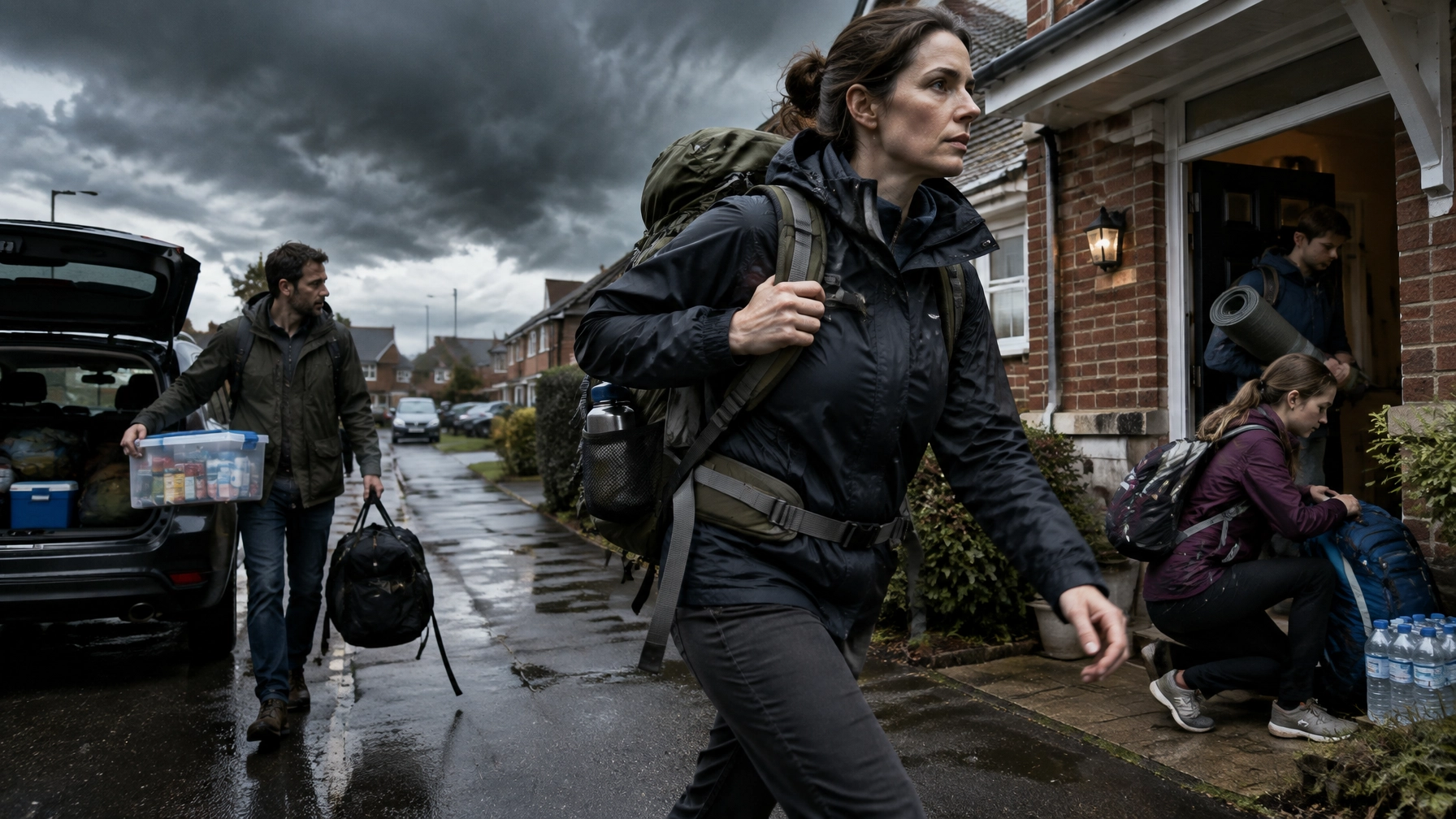
Another headline says the government wants you to stockpile for war. The reality is calmer — and more useful. Here is what the new resilience campaign actually says, what belongs in your kit, and how to get ready without the panic.
You are standing in the supermarket aisle when another headline appears on your phone:
"Government tells households to stockpile food for war."
It is an alarming way to frame the story. But it is not quite what the UK government has said.
The Cabinet Office is preparing a national resilience campaign for later this year. It will encourage households to keep basic supplies at home so they can manage a short period of disruption.
That could mean a power cut, water outage, severe weather, cyber attack or another national emergency. The campaign is not a specific instruction to prepare for war with Russia. It is a broader public information effort based on simple household preparedness.
In practical terms, the advice is sensible: keep enough essentials to manage for two or three days without immediate help.
🧭 What is the new resilience campaign?
The Cabinet Office is developing a public information campaign focused on national resilience. The aim is to help people take simple steps before an emergency happens.
The government says this will help households cope with short-term disruption and allow emergency services to focus on people who are most vulnerable.
The campaign is expected to be built around the existing GOV.UK Prepare guidance. That advice already covers emergencies such as:
- Severe weather
- Flooding
- Power cuts
- Water supply failures
- Infrastructure disruption
- Accidents
- Deliberate attacks
- Cyber incidents
The official framing is deliberately measured. A source quoted by the Financial Times described the message as "common sense, not scaremongering."
That distinction matters. You are not being told to empty supermarket shelves or build a year's supply of food. You are being encouraged to keep a modest buffer of useful items at home.
As Environment Secretary Angela Eagle put it:
"If you've got a store of a bit of food that can keep you going for a while before the emergency services can get to you, you're going to be a lot better off than if you haven't."
That is a preparedness message, not a prediction.
📋 The official emergency preparedness checklist
The government's recommended kit is straightforward. Most households will already have some of it.
Your basic household kit should include:
A battery or wind-up torch
Torches are safer than candles during a power cut. Keep one somewhere everyone can find it in the dark.A portable power bank
Charge it regularly so you can keep a mobile phone working if the mains electricity fails.A battery or wind-up radio
This gives you access to news and official updates during a power cut, especially if mobile data and Wi-Fi are unavailable.Spare batteries
Keep the correct batteries for your torch, radio and any essential medical equipment.A first aid kit
Include basic items such as plasters, bandages, antiseptic, dressings, gloves and medical tape.Hand sanitiser and wet wipes
These are useful for hygiene if the water supply is interrupted.Bottled water
The official guidance does not set one fixed amount for every household. As a general survival benchmark, the World Health Organisation recommends around 2.5 to 3 litres of drinking water per person per day. More is needed for cooking, washing, pets and baby formula.Non-perishable food
Choose food that does not need refrigeration or cooking. Examples include tinned meat, fruit and vegetables.A manual tin opener
This is easy to overlook. A tin is not much use if you cannot open it.
You may also need to add:
- Prescription medicines
- Baby food, nappies and ready-to-feed formula
- Pet food and drinking water
- Spare glasses or contact lens supplies
- Backup batteries for medical equipment
- Important phone numbers written on paper
You do not need to buy everything in one go. Add a few items during your normal shop and rotate them through your household supplies.
For more practical storage advice, see our guide to food and water preparedness.
⚡ Why short-term preparation makes sense
A small emergency supply gives you options.
If the power fails, you may not be able to pay by card, charge your phone or cook normally. If water stops running, you may not be able to flush toilets, wash your hands or prepare food. If roads are blocked by flooding or severe weather, shops may close or deliveries may be delayed.
You do not need a dramatic scenario to make the kit useful.
Ricardo Evangelista experienced this during the Iberian blackout on 28 April 2026. While he was in Lisbon, mobile signals and data stopped working after about an hour. ATMs and supermarkets closed. Transport stopped. The power remained off for almost 24 hours.
He now keeps batteries, torches, chargers and wind-up radios at home.
That is the practical lesson. Preparedness is not about assuming the worst. It is about making a difficult day less difficult.
Prof Hannah Cloke, a climate scientist and risk and resilience expert at the University of Reading, has said that keeping enough supplies for two to three days makes sense.
Her wider point is worth remembering:
"It is a little bit scary for some people I think, but what we really need to think about is how we can prepare better because, in preparing better, it actually becomes less scary."
🌦️ What risks is the government considering?
The campaign is linked to several different pressures.
Extreme weather
The UK has experienced repeated heatwaves, drought conditions and wildfires. Prolonged dry weather can affect agriculture, water supplies, transport and energy demand.
Analysts at Shore Capital have warned that the combined impact of five back-to-back heatwaves and drought could contribute to the worst food security crisis in decades. The National Farmers' Union has also warned that some dairy farmers are already using winter feed because grass has stopped growing.
A forecast strong El Niño has added to concern about disruptive weather patterns. None of this means food will suddenly disappear. It does mean that supply chains can become more fragile.
Cyber attacks
A cyber attack does not need to look like a war movie to cause disruption.
It could affect payment systems, communications, transport, water or energy infrastructure. Iran-linked hackers have been blamed for a temporary shutdown at a small British power plant. The wider energy system was not at risk, but the incident demonstrated why backup plans matter.
A charged power bank, a radio and some cash at home are useful responses to this kind of problem.
Hostile state action
The government is also preparing for hostile activity by states and groups. That includes cyber attacks, disinformation, interference with infrastructure and other forms of pressure.
The UK's updated resilience planning refers to an increasingly complex security environment. It does not say that every household should expect an attack.
It says that the country should be able to respond if disruption occurs.
❌ What the campaign does not say
This is the most important part of the story.
The UK government has not told people to prepare for war with Russia.
The campaign is a broad resilience programme. Russia and other hostile states form part of the wider security context, but the household advice applies to many ordinary emergencies.
The government is separately accelerating work on its Home Defence Programme. This includes:
- Updating the "War Book", which sets out how government departments would operate during serious conflict or threats to the UK
- Coordinating crisis planning across Whitehall
- Preparing a national home defence exercise in 2027
- Improving cooperation between civilian and military organisations
Cabinet Office Minister Darren Jones said the exercise is intended to ensure the UK is ready "should the worst ever happen".
That is government-level planning. It is not the same as telling you to build a wartime bunker.
The Russia context is serious. Russia's foreign ministry summoned the UK deputy head of mission Danae Dholakia and warned that British facilities in Ukraine could be treated as "legitimate targets", along with threats of retaliatory measures. Keir Starmer also warned, before leaving office, that Russia could attack a NATO country within four years, based on western intelligence assessments.
Those developments explain why national security planning is receiving attention. They do not change the contents of the household checklist.
🏠 Build your disaster preparedness plan calmly
A useful disaster preparedness plan does not need to be complicated.
Start with these five steps:
- Make a two- or three-day food and water plan.
- Put your torch, radio, batteries and power bank in one known place.
- Write down important phone numbers and medical information.
- Check whether anyone in your household needs extra support.
- Review the kit every few months and replace expired items.
The official Prepare guidance also recommends checking your local risks, signing up for relevant alerts and learning how to turn off your gas, electricity and water.
If you live in England, Scotland or Wales, check whether you or someone in your household should join the Priority Services Register. Northern Ireland has equivalent Customer Care Registers. These services can provide additional support during supply interruptions.
You can also read our 72-hour blackout checklist for a practical home-based plan.
✅ Quick-reference summary
The government's new campaign means:
- ☐Keep a modest supply of food and water at home.
- ☐Aim to manage for around two to three days.
- ☐Have a torch, radio, power bank and spare batteries.
- ☐Store basic first aid and hygiene supplies.
- ☐Include medicines, baby supplies and pet food where needed.
- ☐Follow official updates during an emergency.
- ☐Do not panic-buy or hoard months of supplies.
- ☐Do not interpret the campaign as a specific warning that war with Russia is imminent.
The message is simple: be ready for disruption, not frightened by headlines.
A few tins, some water, a working torch and a written plan will not solve every emergency. But they can give you time, flexibility and confidence while help reaches those who need it most.
Sources and further reading
- UK Government Resilience Action Plan 2026 Implementation Report
- GOV.UK Prepare: Get prepared for emergencies
- The Guardian: UK to warn citizens to stock up on food
- The Independent: UK households urged to stock up on essentials
- BBC: War may be coming. Are we psychologically ready?