Quick answer
A useful family communication plan records who to contact, where to meet and what to do if nobody replies. Keep paper copies, agree safe check-in times and practise with your actual phones and backup equipment before a disruption.
Start with your household’s ordinary day
A communication plan is useful when a phone battery runs flat, a train is cancelled or a storm interrupts the electricity supply. It should reduce decisions rather than create an elaborate emergency procedure. Start with the people who normally depend on one another: children, separated parents, relatives living alone, carers and anyone who needs support with mobility or communication. Include people who work shifts or travel between more than one home.
Spend twenty minutes discussing a typical weekday. Where is everyone at lunchtime and at the end of the school day? Who has keys, who can collect children and who has poor mobile reception? Write down the awkward gaps. A plan based on real journeys and responsibilities is more useful than a shopping list of equipment. Ask each person what would make them feel confident rather than assuming everyone wants another app.
Put essential contacts on paper
Make a small contact card for wallets and school bags, plus a larger copy at home. Include names, mobile numbers, a trusted nearby adult and a willing contact outside your immediate area. The distant contact can collect short updates and pass them on, but their network might also be affected. Agree the role beforehand and do not describe it as a guaranteed solution to congestion.
Add your electricity network contact, landlord or housing provider and any relevant care service. In Great Britain, 105 connects callers to their electricity network operator; keep the local network number separately when travelling in Northern Ireland or abroad. Use 999 or 112 for an emergency, not for routine outage information. Keep sensitive medical details on a separate private record rather than on a card that may be lost in public.
Agree a message format and check-in window
Use ordinary language: name, location, condition and next action. For example, “Sam, at the office, safe, staying here until transport advice changes; next update at six.” A clear message helps a relative distinguish a delayed update from a new instruction. Include the time it was written, because messages can arrive late. Avoid unexplained code words unless there is a specific safeguarding reason and everyone understands them.
Choose a primary channel, such as SMS or your usual messaging service, and a backup. SMS can sometimes get through when a call cannot, but it is not guaranteed and still needs a working mobile network. Agree reasonable check-in times rather than repeatedly calling every minute. Decide what happens after a missed check-in: try the backup, contact the nominated adult, then follow the pre-agreed safe-location rule. Immediate danger always overrides the timetable.
Choose meeting places with safe alternatives
Identify somewhere near home and another location outside the immediate neighbourhood. Describe the exact entrance or landmark, not simply “the park”. Think about darkness, rain, accessibility, opening hours and whether a public building will remain open without electricity. A locked library is not a dependable shelter. Include a simple paper map if someone might approach from an unfamiliar direction.
Do not tell people to cross floodwater, ignore cordons or leave a safe workplace just to reach a meeting point. The plan should say to follow emergency-service instructions and remain somewhere safe when travel is uncertain. For children, use school collection arrangements rather than inventing a competing system. Confirm authorised collectors and ask the school how it communicates changes when its normal messaging platform is unavailable.
Understand what your phones depend on
A power cut at home does not automatically remove mobile service, but wider electricity or network failures can affect it. Ofcom advises charging devices and considering a power bank before severe weather. Check that your charging cable actually fits each phone. A charged battery is only useful if everyone can find it and knows how to connect it without searching through a dark drawer.
Many home telephone services now use broadband equipment, which needs electricity. Ask your provider what happens to calls during a power cut and explain if you depend on the landline or have poor mobile coverage. Do not assume a cordless handset or an internet-connected care alarm will keep working. Discuss backup arrangements directly with the provider, including how long any battery support lasts and whether a care-alarm service is compatible.
Keep official information separate from family chat
Agree who will check official advice and how they will share it. A battery or wind-up radio can provide information without home broadband. Write down suitable local stations and practise tuning them. Treat forwarded screenshots and neighbourhood rumours cautiously: look for a named authority, a location and a publication time before passing them on. An old warning may be genuine but irrelevant to your present situation.
GOV.UK Emergency Alerts use compatible devices on 4G and 5G networks. They do not require mobile data or Wi-Fi, but a switched-off or Wi-Fi-only device will not receive them. A phone in airplane mode may not receive them either. Do not plan to switch every handset off for the whole day without considering this trade-off. Alerts are official warnings, not a way for relatives to send messages to one another.
Add radios only where they solve a real problem
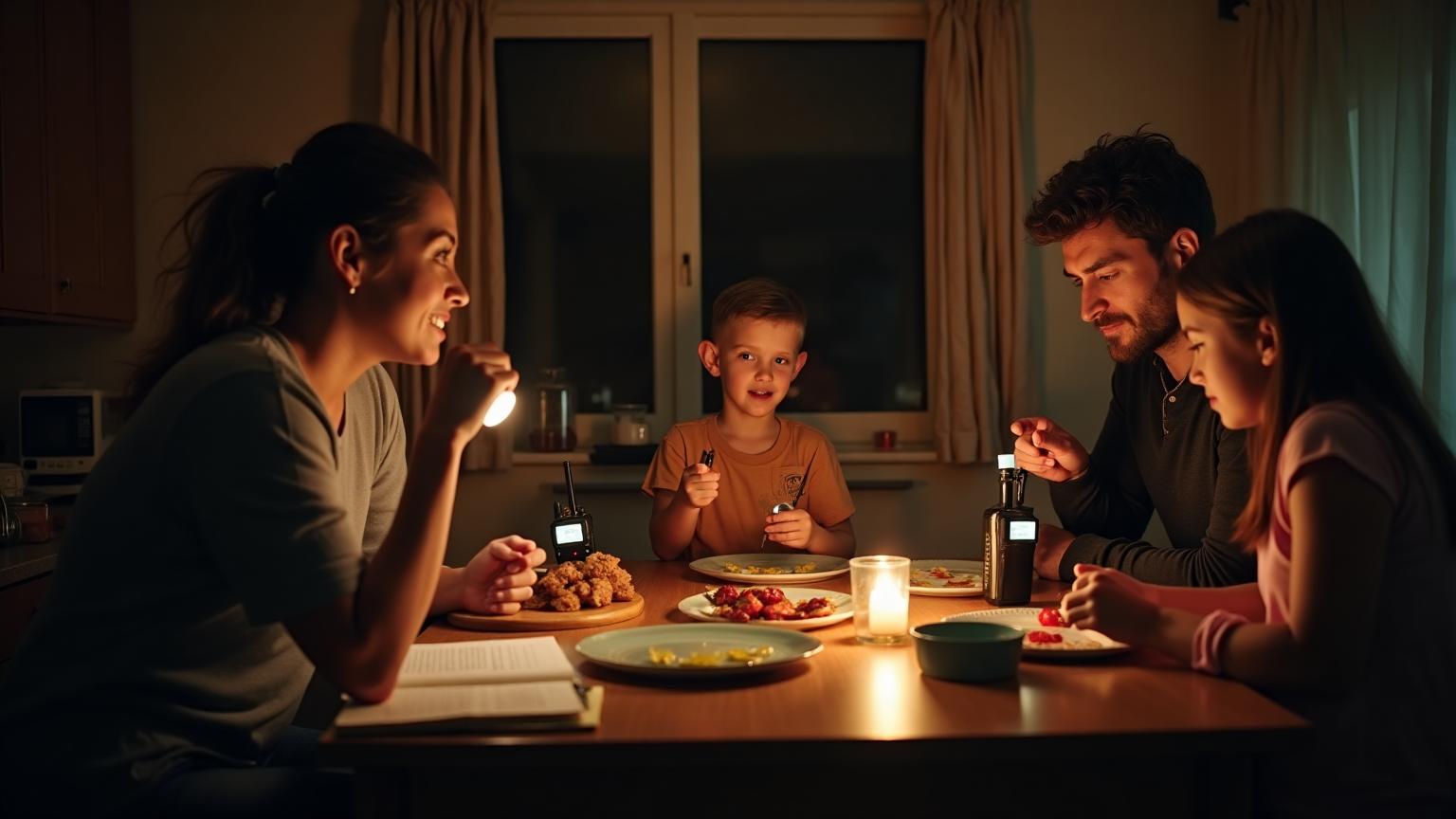
Compliant PMR446 handsets can provide licence-exempt local communication, but range depends on buildings, terrain and the equipment. Test from the actual locations you intend to use, at a safe time and without trespassing. Agree a channel, a listening window and a plain-language identification. Privacy codes filter what you hear; they do not make a conversation confidential. Avoid transmitting addresses, medical details or children’s routines.
Offline phone messaging can be another local tool, but only if the chosen app works on everyone’s devices and is already configured. It does not automatically reach a relative across town. Neither an app nor a radio replaces emergency calling. Start with paper contacts and sensible meeting arrangements; buy extra equipment only after identifying a communication gap and confirming that the proposed tool closes it in practice.
Make the plan accessible and easy to rehearse
Use large print, a clear typeface or translated copies where helpful. Someone with hearing loss may need a vibration-based notification, while someone with limited dexterity may prefer a simpler handset. Ask rather than guess. Agree how carers and trusted neighbours can help, with the person’s consent. If someone relies on powered medical equipment, discuss a specific continuity plan with their clinical team and service providers.
Rehearse without cutting the household electricity supply. Send one sample check-in, locate the paper card and walk to the nearby meeting point in daylight. Ask each person to explain the next step in their own words. Afterwards, correct confusing wording and missing numbers. Review after a house move, school change, new care arrangement or phone replacement, and set a routine reminder so the plan does not disappear into a drawer.
A one-page plan you can finish today
Use headings for household members, primary contact method, backup contact, check-in times, nearby meeting point, alternative safe location and collection arrangements. Leave space for the date and the person responsible for updating it. Keep the main page short enough to read under stress. Put equipment instructions and detailed care information elsewhere, with a clear note explaining where authorised people can find them.
Finish by agreeing two practical rules: nobody takes an unsafe journey solely because a message is late, and nobody assumes silence means permission to change a child’s collection arrangements. Share the plan with the people who have accepted a role, not an entire social-media group. A modest, rehearsed agreement offers more reassurance than an impressive document that nobody has read.
Related practical guides
❓ FAQs
Sources
Sources checked for this editorial revision; accessed 9 November 2026. Check current official guidance before acting.
- GOV.UK Be Ready: household preparedness — accessed 9 November 2026.
- Ofcom: staying connected in severe weather — accessed 9 November 2026.
- GOV.UK: how Emergency Alerts work — accessed 9 November 2026.
- Ofcom: analogue and digital PMR446 information sheet (February 2018) — accessed 9 November 2026.